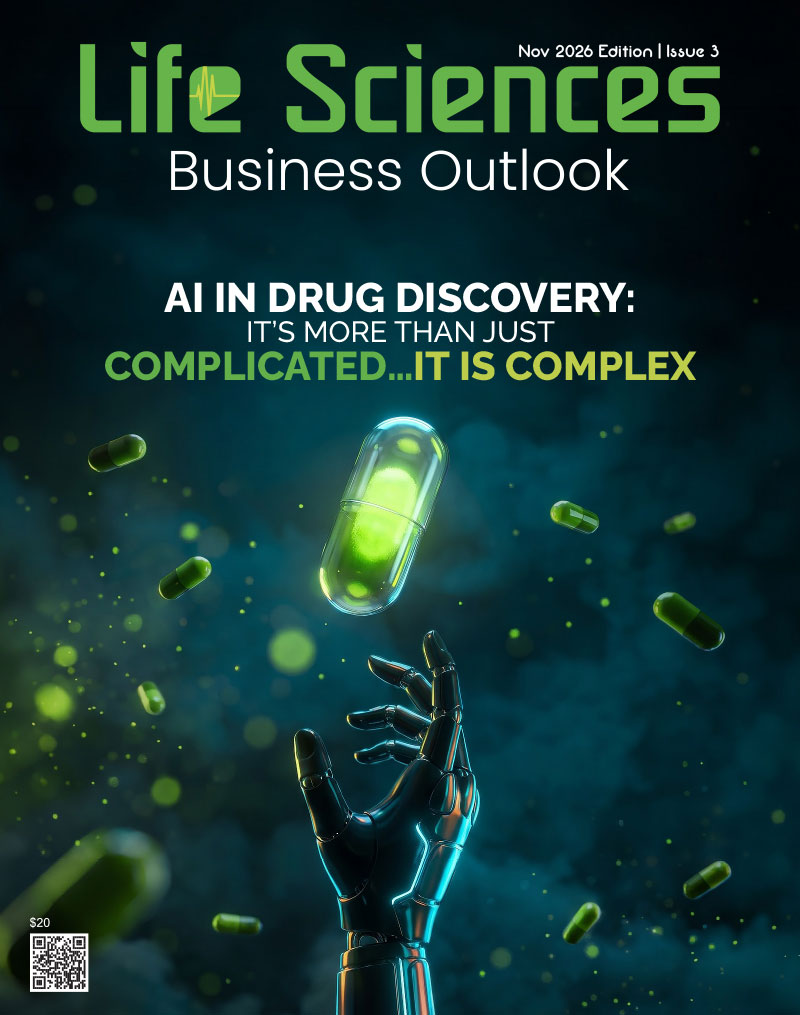
Drug discovery has a data problem hiding inside its speed problem. Computational tools can now generate enormous numbers of molecular candidates, but every prediction still must face experimental reality. Carterra was built around the gap between those two worlds, using high-throughput surface plasmon resonance (HT-SPR™) technology to bring detailed molecular-interaction data earlier into discovery. The result is a platform designed to help researchers test more candidates, gather richer evidence, and make decisions sooner.
When Carterra was founded, SPR was already a powerful method for studying molecular interactions. Its limitation was throughput. Researchers often had to rely on lower-resolution screening tools early in discovery and reserve high-resolution characterization for later stages. Carterra saw a way to change that equation by combining SPR with high-throughput microfluidics, increasing throughput by as much as 100-fold without sacrificing data quality. The company’s CEO and founder, Josh Eckman, describes the evolution simply, “Our role has evolved from simply increasing the throughput of SPR to bringing high-quality, information-rich data earlier into discovery, so researchers can make better decisions sooner.” The value of that approach became particularly visible during the COVID-19 pandemic, when Carterra’s LSA® platform was used by Eli Lilly in work that led to bamlanivimab, the first COVID-19 therapeutic antibody discovered in a 90-day timeline. For Carterra, the achievement demonstrated that detailed biophysical characterization could operate at the pace required for an urgent therapeutic program rather than becoming a late-stage bottleneck.
The rise of artificial intelligence (AI) is now creating another pressure point. AI can generate molecular designs at tremendous scale, but computational predictions have to be validated experimentally. As Eckman explains, the bottleneck is increasingly shifting toward the production of high-quality wet-lab data needed to train and refine those models. “For Carterra, the opportunity is not simply to generate more data, but more reliable data.” The distinction matters because AI models depend heavily on both the quantity and quality of their training data.
HT-SPR technology provides information beyond a conventional endpoint measurement. Researchers can assess affinity, as well as kinetics—how rapidly a molecule binds and how long it remains bound. By producing this detailed information across large numbers of molecules, Carterra gives AI-driven workflows a deeper experimental foundation from which to learn. Compared with traditional SPR platforms, the technology can generate up to 100 times the data per unit of time while retaining affinity and kinetic information.
The concept becomes especially powerful in a “lab-in-the-loop” workflow, where AI proposes molecules, experiments test them, and the resulting data informs the next design cycle. Carterra’s platforms allow candidates to be tested in parallel while generating quantitative affinity and kinetic data that can be fed back into subsequent rounds of design. More cycles become possible, researchers can ask more sophisticated questions, and teams can learn more from each iteration. This creates a much tighter feedback loop between computational prediction and experimental reality and ultimately gives teams the opportunity to reach better candidates faster.
Carterra’s expanding instrument portfolio supports that ambition. The LSA®, LSA-XT, and Carterra Ultra® established the company’s high-throughput approach using arrays to analyze hundreds of immobilized molecules in parallel. Carterra Vega™ takes a different route with 48 independent flow channels, enabling scientists to run many samples simultaneously against a smaller number of surface targets. The platform can screen more than 20,000 small-molecule interactions per day, roughly 12 times the throughput of traditional eight-channel SPR systems. Carterra Vega™ also broadens the types of scientific questions Carterra can address. Together, the company’s platforms support discovery across large molecules, small molecules, and fragments, while allowing researchers to incorporate more targets, controls, replicates, selectivity studies, off-target binding analysis, and detailed kinetic measurements. The broader objective is to let scientists design experiments around the biology rather than around the constraints of analytical technology.
The connection between AI and experimental biology can already be seen in customer programs. Carterra highlights an Anthropic protein-design study in which Claude autonomously generated 1,320 protein-binding designs against 15 targets. Twist Bioscience and Adaptyv Bio then experimentally evaluated those designs using Carterra HT-SPR platforms. A campaign that could have taken months on traditional SPR systems was completed within weeks, while the experiments generated real-time kinetic and affinity data and enabled species cross-reactivity and head-to-head comparisons within the same dataset.
For Carterra, the significance goes beyond shortening timelines. Rich experimental datasets can tighten the feedback loop between computational predictions and biological evidence, creating opportunities to investigate more complex interactions and refine subsequent designs. As Twist Bioscience CSO Colby Souders notes, “It will be critical to fully explore features like conditional binding, AND-NOT gating binding events, massively multiplexed on- and off-target arrays, rapid epitope mapping, and complex multispecific interactions…[these] will be the next wave of features AI will aim to predict and design, which will require the unique combination of scale, technology and biological capabilities.” As AI takes on increasingly complex biological questions, the challenge will be ensuring experimental capabilities can keep pace. Looking three to five years ahead, Carterra expects the AI-enabled laboratory to become increasingly integrated and autonomous, with AI generating ideas, automated laboratories testing them at scale, and experimental results continuously influencing the next round of designs. Eckman sees the opportunity as larger than simply speeding up established workflows, “Bringing together AI, automation, and technologies like HT-SPR gives researchers the opportunity not just to accelerate existing workflows, but to run experiments and explore biology at a scale that simply wasn’t practical before.” Carterra’s future, then, is closely tied to a changing definition of speed in drug discovery. Moving faster is useful only when researchers can still see what happened, understand why it happened, and use that knowledge to decide what to test next. The next era of drug discovery will depend not only on what AI can design, but on how quickly and deeply those designs can be tested against biological reality—and Carterra’s role is to help ensure that experimental biology has the scale, speed, and depth to keep pace.
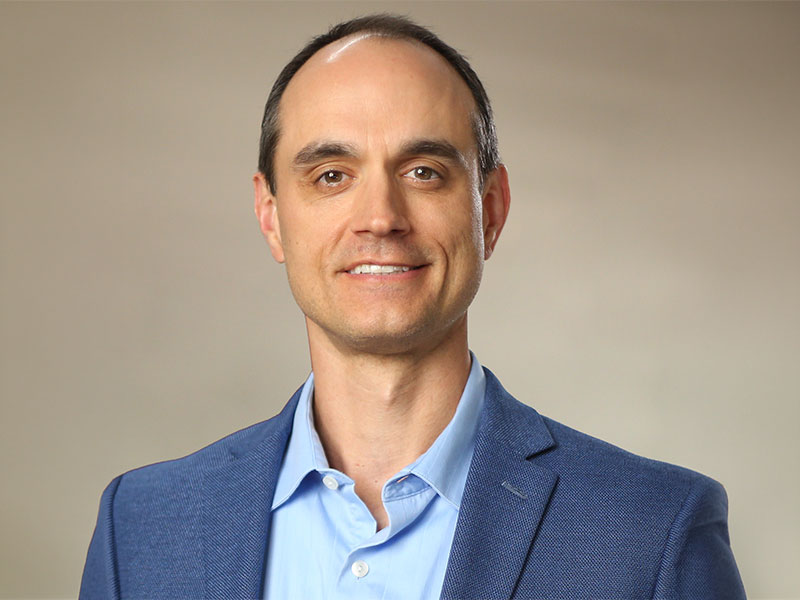
Josh Eckman, CEO
carterra-bio.com
“Our role has evolved from simply increasing the throughput of SPR to bringing high-quality, information-rich data earlier into discovery, so researchers can make better decisions sooner.”